MRI with Claustrophobia: How Germany Helps Patients Undergo the Examination Without Anesthesia

Most patients believe that the only solution for severe claustrophobia is general anesthesia or refusing the examination. However, modern German radiology uses a whole range of technologies and methods that allow many patients to undergo an MRI while conscious, even with a pronounced fear of enclosed spaces. For oncology patients, people with multiple sclerosis, spinal diseases, joint conditions, liver disorders, and other organs, regular magnetic resonance imaging is part of their treatment. If a person cannot undergo the examination due to claustrophobia, this may lead to delayed diagnosis, the inability to assess the effectiveness of therapy, or the failure to detect a disease recurrence in a timely manner. This is precisely why, in Germany, great attention is paid not only to the quality of MRI, but also to creating conditions that allow the patient to calmly complete the examination.
Why Claustrophobia Occurs During an MRI
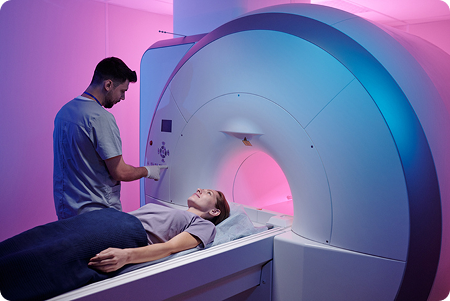
According to the European Society of Radiology and German radiology centers, claustrophobia is one of the most common reasons for prematurely terminating an MRI. During the examination, the patient is inside a relatively narrow tunnel, hears the loud sounds of the machine, and must remain still for an extended period of time. In some people, this causes pronounced anxiety, a feeling of shortness of breath, a rapid heartbeat, or a panic attack. At the same time, the magnetic resonance imaging itself remains one of the safest diagnostic methods and does not use ionizing radiation.
How the Problem Is Solved in Germany
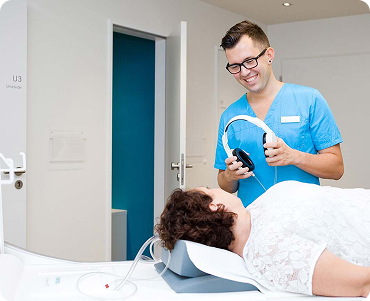
Modern German radiology centers use several methods to reduce a patient's anxiety. Depending on the clinical situation, the following may be applied:
The main goal of German specialists is to perform high-quality diagnostics with minimal stress for the patient.
What Is the MRT-Brille
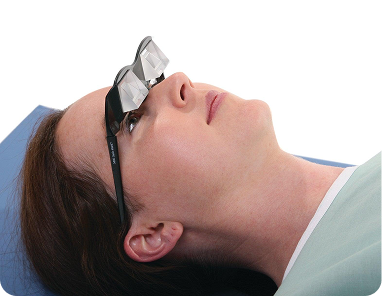
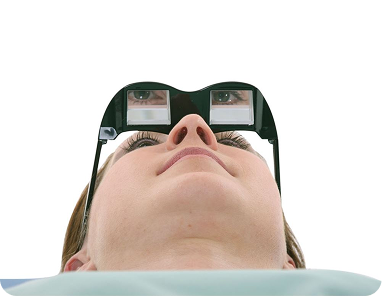
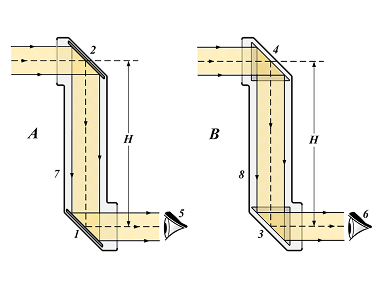
One of the technologies used in some German centers is special MRI-compatible prismatic goggles. The system uses special optical prisms or mirrors, thanks to which the patient, while inside the scanner, can see the space outside the tunnel or a screen with a video image. In effect, the brain stops perceiving the surrounding space as completely enclosed.
It is important to understand that such systems are not suitable for all types of examinations. Their applicability depends on the area being examined, the MRI coil used, and the technical features of the specific machine. For example, in some head examinations, the use of such systems may be impossible.
Why Doctors Try to Avoid Anesthesia
Many patients believe it is easier to have an MRI under general anesthesia. However, when possible, German specialists prefer to do without it. An examination performed while conscious allows one to avoid additional anesthesiological risks, does not require a lengthy recovery after the procedure, and facilitates the organization of repeat follow-up examinations, which are especially important for patients with chronic diseases and cancer. This is precisely why psychological preparation, modern technologies for visual comfort, and special methods of patient support are used first.
Clinical Case
A patient contacted German Medical Concierge who, after obtaining a second medical opinion in Germany, needed an MRI of the abdominal cavity with contrast to choose further treatment tactics. The main problem turned out to be severe claustrophobia. Previous attempts to undergo the examination had ended in a panic attack, and going forward the patient was scheduled to undergo a follow-up MRI every six months.
The German Medical Concierge team selected a German clinic that uses the MRT-Brille system. During the examination, the patient was inside the scanner, but thanks to the prismatic goggles, perceived the surrounding space as open and was able to calmly complete the examination without anesthesia and without interrupting the procedure. The resulting images fully met the diagnostic requirements and were reviewed by a medical board, after which a further treatment strategy was determined for the patient. Today he undergoes follow-up MRIs regularly and no longer avoids examinations out of fear.
Why Germany Is Considered One of the Leaders in Modern Radiology
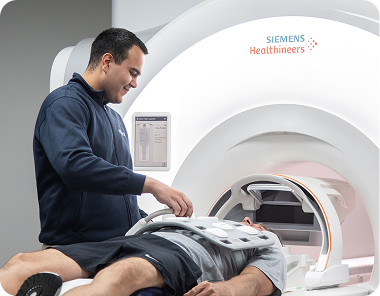
Germany's university hospitals have modern MRI systems, specialized radiology centers, and multidisciplinary teams uniting radiologists, oncologists, neurologists, orthopedists, and other specialists. Great attention is paid not only to the technical quality of the image, but also to patient safety, the standardization of examinations, and the use of modern technologies that increase comfort during diagnostics.
German Medical Concierge
For international patients, it can be difficult to determine which clinic has the necessary equipment and which technologies are available specifically for their clinical situation. German Medical Concierge analyzes medical documentation, selects specialized radiology centers in Germany, organizes diagnostics and a second medical opinion, and accompanies the patient at all stages of the examination.
Modern German medicine regards patient comfort as part of high-quality diagnostics. In many cases, severe claustrophobia is no longer a reason to refuse magnetic resonance imaging. Thanks to modern technologies, specialized equipment, and an individual approach, many patients can undergo the necessary examination without anesthesia, without panic, and without a reduction in the quality of diagnostics.