
Veneers and Complications: Medical Errors in Aesthetic Dentistry and Real Health Consequences

In recent years, veneer placement has become one of the most sought-after procedures in aesthetic dentistry. For many patients, it's a way to quickly change their appearance and achieve a predictable visual result. However, behind the apparent simplicity lies a complex medical intervention requiring precise diagnostics, proper planning, and strict adherence to clinical protocols. When these are violated, the consequences can extend beyond the oral cavity and affect the overall health of the organism.
One such case is the story of a patient from Kazakhstan, Tair Marasulov, which clearly demonstrates how an aesthetic procedure can escalate into a systemic medical problem.
INITIAL TREATMENT STAGE
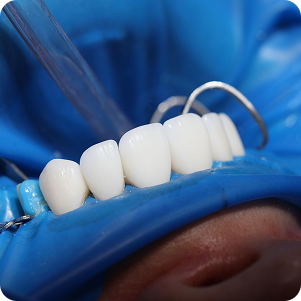
The patient sought veneer placement without any pronounced dental complaints. It was exclusively about aesthetic correction. Initially, minimal intervention was planned, working only on the front teeth area. During treatment, the scope of intervention was expanded to include the chewing group. During tooth preparation, significant grinding was performed, which substantially altered the tooth anatomy and their functional load. Such a volume of hard tissue reduction always requires special caution, as it directly affects the future stability of the construction and the state of the dental system. After veneer installation, the patient experienced no significant discomfort during the first weeks, creating a sense of successful outcome.

DEVELOPMENT OF PAIN SYNDROME
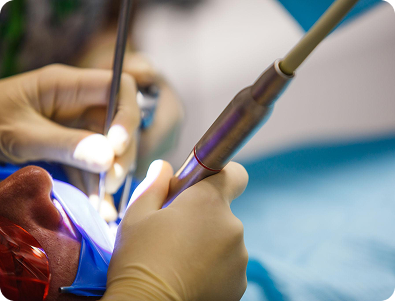
Some time after completing the main treatment stage, additional correction was performed. Despite the absence of clear indications, the intervention affected both upper and lower teeth. After this, the patient developed a pronounced pain reaction. The pain was constant, intensified under load, and showed no tendency to decrease. At this stage, the key problem was the absence of comprehensive diagnostics. Instead of identifying the cause of pain, symptomatic treatment tactics were chosen. The patient was advised to seek help when discomfort appeared, but this not only failed to reduce symptom intensity but also didn't affect the source of the problem. This regimen persisted for an extended period and was accompanied by gradual deterioration of overall well-being.
Against the background of constant pain and multiple interventions, bite disorders began to form. Tooth contact became uneven, load was redistributed to individual areas, leading to their overload. Additionally, signs of temporomandibular joint dysfunction appeared: pain when opening the mouth, clicking sounds, limitation of movement amplitude. These symptoms indicate disruption of the basic biomechanics of the dental system. The situation was aggravated by the fact that corrections continued but did not lead to stabilization. As a result, a vicious circle formed: interventions intensified the problem, and pain required increasingly frequent medication control.
The prolonged existence of the inflammatory process combined with constant medication load led to deterioration of the organism's overall condition.
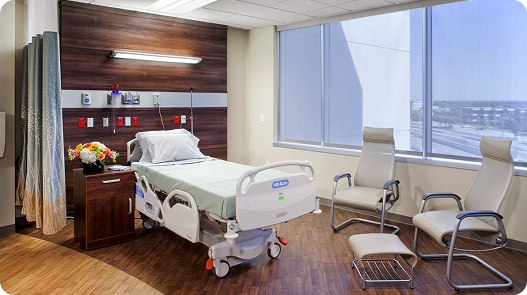
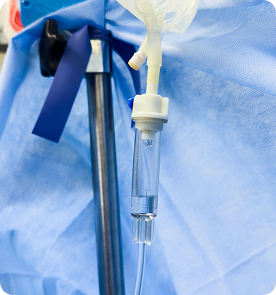
The situation entered an acute phase and required emergency hospitalization. During examination, infectious kidney damage was detected. According to doctors' conclusions, one of the possible sources of infection could have been a chronic focus in the oral cavity with subsequent hematogenous spread.
Such cases are rare, but under certain conditions, dental infection can indeed lead to damage to adjacent and internal organs. At this stage, it was already a systemic disease with potentially severe consequences.
ORGANIZING TREATMENT IN GERMANY
After a long period of unsuccessful treatment, the patient contacted German Medical Concierge representatives in Kazakhstan. Based on situation analysis, a decision was made to continue treatment in Germany.
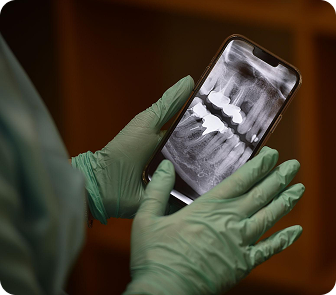
The fundamental difference was a change in approach. Treatment began with a complete reassessment of the patient's condition. Comprehensive diagnostics were conducted, including laboratory tests, instrumental methods, and assessment of internal organ status. The case was handed over to an interdisciplinary team of specialists. This format allowed identifying the root cause and building a sequential treatment strategy. Within the first week, it was possible to stabilize the patient's condition and reduce the severity of the acute process. Further treatment was aimed at eliminating infection, restoring overall condition, and preparing for subsequent dental reconstruction. Complete recovery took several months and proceeded under constant specialist supervision.
This case demonstrates that treatment effectiveness is determined not only by the level of an individual specialist but also by proper organization of the entire process. Without accurate diagnostics and a structured strategy, even multiple interventions may yield no results. Meanwhile, the absence of a clear approach allows the problem to extend beyond its original scope.
German Medical Concierge provides comprehensive patient support at all treatment stages. Having representative offices in Kazakhstan allows starting work on the case at an early stage: conducting medical documentation analysis, assessing risks, and forming an action plan. Subsequently, treatment in Germany is organized, a specialized team of specialists is selected, diagnostic and treatment stages are coordinated, and constant patient support is ensured. In complex clinical situations where various body systems are involved, such an approach becomes a key factor for successful outcomes.

CONCLUSION
Veneer placement requires the same level of medical responsibility as any other intervention. This case shows that ignoring clinical signals and the absence of a systemic approach can lead to serious consequences. Modern medicine implies precise diagnostics, interdisciplinary interaction, and control at every treatment stage. It is precisely this approach that ensures not only symptom elimination but also complete health restoration.