
Charité Opens New Research Centers

Charité, one of Europe's leading university hospitals, together with the Technical University of Berlin, has officially opened two new research centers — The Simulated Human (Si-M) and the Berlin Center for Advanced Therapies (BeCAT). This is one of the largest scientific and medical projects in recent years in Germany, aimed at developing personalized medicine, cellular and gene therapy, as well as accelerating the introduction of innovative diagnostic and treatment methods into clinical practice.
For patients, this means more than just the appearance of new laboratories. The opening of new centers creates conditions under which promising scientific developments can transition faster from fundamental research to real application in medicine.
Even the most promising medical discoveries usually take a long path before becoming part of everyday clinical practice. After laboratory research, preclinical trials, safety assessments, clinical studies, and compliance with strict international requirements are necessary. This entire process can take many years. Charité's new research centers were created precisely to unite fundamental science, university medicine, and clinical practice into a single system. This approach allows for significant acceleration in the development of new technologies and their implementation in patient treatment.
BeCAT: Development of Cellular and Gene Therapy
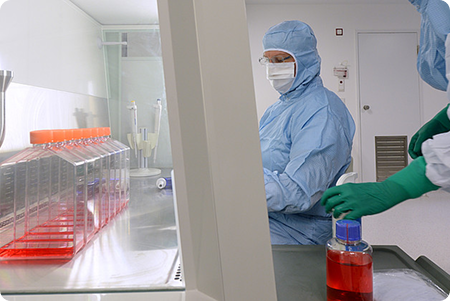
The Berlin Center for Advanced Therapies (BeCAT) will become one of Europe's leading centers for the development of Advanced Therapy Medicinal Products (ATMP) — modern cellular, gene, and tissue engineering treatment methods.
Many innovative areas of modern medicine belong to this category, including cellular therapy, gene therapy, and regenerative medicine. The center is equipped with laboratories that meet international GMP standards, which will allow for faster translation of promising scientific developments into clinical trials and further application in patients.

Si-M: Next-Generation Disease Modeling
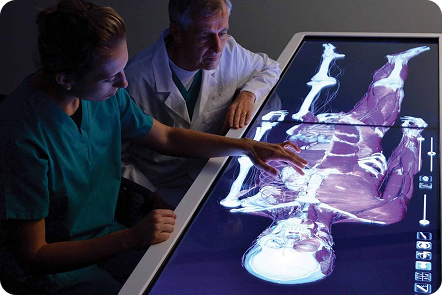
The second research center — The Simulated Human (Si-M) — is focused on creating high-precision models of human tissues and organs.
Scientists use organoids, "organ-on-a-chip" technologies, digital modeling, and other modern methods that allow reproducing disease development in laboratory conditions. This helps to study disease mechanisms more deeply, predict the body's response to various treatment methods, and develop more precise personalized approaches to therapy. Such technologies are becoming one of the key foundations of modern precision medicine.

Which Patients Will Be Able to Benefit
The development of such research platforms is especially important for areas where traditional treatment methods have limited capabilities.
First and foremost, this concerns oncological diseases, rare genetic diseases, hereditary syndromes, autoimmune diseases, certain neurological pathologies, and other complex conditions where new approaches to diagnosis and therapy are necessary. It's important to understand that the opening of new centers does not mean the appearance of ready-made treatment methods today. However, it is precisely such scientific projects that create the foundation for faster emergence of new technologies in clinical practice.
Why Germany Remains a Global Leader in Medical Innovation
German university medicine is traditionally built on close interaction between science and clinical practice. The largest university hospitals are simultaneously research centers where new diagnostic and treatment methods are not only developed but also undergo clinical evaluation before being implemented into the healthcare system. It is precisely thanks to this model that Germany remains one of the world leaders in personalized medicine, cellular therapy, gene therapy, and translational medical research.
German Medical Concierge
German Medical Concierge has been accompanying patients undergoing diagnostics and treatment at leading German university hospitals, including Charité, for many years.
The emergence of new research centers and innovative medical technologies opens up additional opportunities for patients, however, it is important to understand which methods are already available in clinical practice and which are still at the scientific research stage. It is equally important to determine whether a specific clinical case is suitable for treatment at a specialized university center. The German Medical Concierge team analyzes medical documentation, helps select a specialized university clinic and specialists, organizes second medical opinions, diagnostics and treatment in Germany, providing patients with access to the possibilities of modern German university medicine.
The opening of the Si-M and BeCAT centers confirms that Charité continues to strengthen its position as one of the world's leading university medical centers. For patients, this means a faster path from scientific discoveries to modern diagnostic methods, personalized treatment, and innovative therapy.