
Rare diagnoses in Germany: how the cause is found when other doctors cannot make a diagnosis

Modern medicine has achieved tremendous success in diagnosing most diseases. Nevertheless, thousands of patients around the world live for years without an accurate diagnosis. They undergo dozens of examinations, consult various specialists, receive contradictory conclusions and often begin treatment that does not bring the expected result. In international medical literature, there is an official term for this situation — diagnostic odyssey. It describes the patient's long journey from the appearance of the first symptoms to the establishment of the correct diagnosis. Studies show that it is patients with suspected rare diseases who most often go through this difficult path.
Germany is considered one of the leading countries in Europe in the diagnosis of rare and difficult-to-recognize diseases. University Centers for Rare Diseases operate here, created specifically for patients who could not be diagnosed within the framework of a standard examination. Their task is not only to find the name of the disease, but also to determine the cause of the symptoms, choose the right treatment strategy and predict the further course of the disease.
Why some diseases remain undiagnosed for years
In many cases, the problem lies not in the lack of qualifications of doctors, but in the complexity of the disease itself. Rare diseases often manifest with nonspecific symptoms: chronic fatigue, pain syndrome, simultaneous dysfunction of several organs, neurological manifestations or unexplained changes in laboratory parameters. Individually, these symptoms can correspond to dozens of different diagnoses.
Additional complexity is created by the fact that many rare diseases are extremely uncommon. Most general practitioners or even specialized doctors may never encounter such a case throughout their entire professional career. Therefore, patients often receive several different diagnoses, undergo numerous examinations and consultations, but the cause of the disease remains unknown. It is such cases that become grounds for referral to specialized university centers in Germany.


Which patients are most often referred to university centers in Germany
Most often, these are patients with unexplained neurological symptoms, rare autoimmune diseases, hereditary syndromes, genetic metabolic disorders, systemic inflammatory diseases, complex endocrine disorders, unclear immunological conditions and rare oncological diseases.
However, the final diagnosis is not always a rare disease. In a number of cases, specialists identify a combination of several common diseases that together form an unusual clinical picture. That is why the main goal of diagnosis is not to search for a "rare disease", but to search for the true cause of the patient's symptoms.
How the rare disease diagnostic system works in Germany
The main feature of the German approach lies in the interdisciplinary model. The case is reviewed not by one doctor, but by a team of specialists from various fields. Depending on the clinical picture, neurologists, geneticists, rheumatologists, immunologists, endocrinologists, hematologists, gastroenterologists, oncologists, specialists in metabolic diseases and radiologists may participate in the discussion.
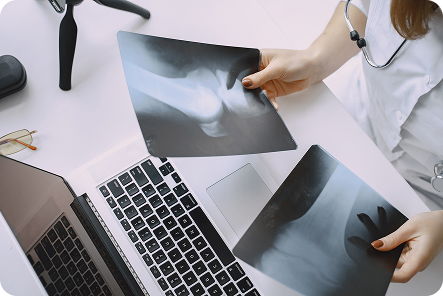
An important role is played by the re-analysis of already completed studies. German specialists re-examine medical documentation, laboratory test results, MRI, CT, PET-CT data, biopsies and other examinations. In many cases, it is the repeated expert interpretation that allows the detection of details that were not previously linked to each other.
If standard methods are insufficient, modern molecular genetic technologies are used, including exome sequencing, genome sequencing, specialized genetic research panels, as well as additional immunological, metabolic and biochemical tests. Such a comprehensive approach significantly increases the likelihood of establishing an accurate diagnosis.

Why a systematic approach is important
Studies conducted at German university centers for rare diseases show that patients undergoing a long diagnostic odyssey are significantly more often hospitalized, undergo repeated examinations and bear substantially higher medical costs even before a diagnosis is made. This confirms how important it is to refer the patient in a timely manner to a specialized center, where diagnostics are carried out according to a structured algorithm with the participation of an interdisciplinary team.
It is this approach that allows reducing the time to diagnosis, avoiding repetition of the same studies, abandoning ineffective treatment and moving faster to a personalized medical strategy.
The role of German Medical Concierge
For international patients, access to such a diagnostic system requires competent medical coordination. It is necessary to determine whether the case truly meets the criteria of a specialized center, prepare a complete package of medical documentation, organize professional medical translation, choose a specialized university center and structure the sequence of consultations and examinations.
German Medical Concierge accompanies the patient at all stages of this process. The team analyzes medical documentation, selects specialized university clinics and specialists, organizes a second medical opinion, coordinates diagnostics and remains with the patient until the final diagnosis is obtained and a further treatment plan is formed.
Modern diagnosis of rare diseases is not a search for one laboratory error or one analysis. It is a comprehensive work of a team of experts, modern technologies and university medicine. That is why Germany remains one of the European leaders in the diagnosis of complex, rare and long-unexplained diseases.