
Rehabilitation in Germany: Recovery After Stroke, Trauma, and Oncology
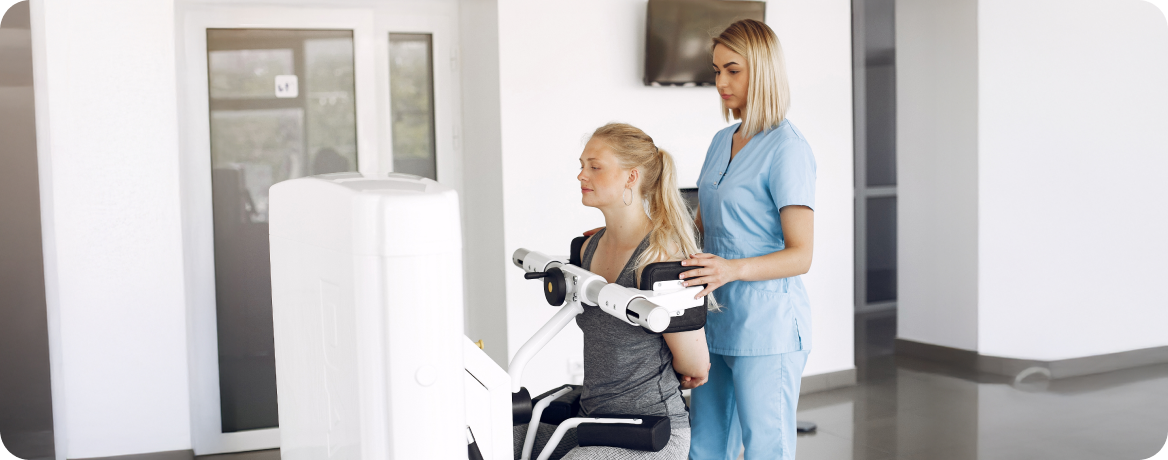
Rehabilitation in Germany has long been considered one of the strongest in the world. German clinics admit patients after strokes, severe injuries, oncological diseases, spinal surgeries, neurosurgical interventions, and complex systemic conditions. This is often where patients are referred when they require more than just recovery from an illness, but a full return to life.
The main difference in the German approach is that rehabilitation is viewed here as a continuation of treatment, rather than an additional stage. The focus is not only on stabilizing the patient's condition but also on restoring motor functions, cognitive abilities, speech, memory, and the capacity for independent living.
WHY REHABILITATION IN GERMANY IS CONSIDERED ONE OF THE BEST
The German rehabilitation system is built on an interdisciplinary model. A team of specialists works with the patient simultaneously: neurologists, rehabilitation therapists, physiotherapists, occupational therapists, neuropsychologists, speech therapists, cardiologists, and others.
This approach is particularly crucial after severe illnesses. For example, after a stroke, a patient needs not only to regain movement but also to rebuild speech, memory, concentration, coordination, and basic daily life skills. Following oncological treatment, a key task is to combat chronic weakness, the effects of chemotherapy, and physical exhaustion.
That is why German rehabilitation centers more closely resemble high-tech medical campuses than classic health resort clinics.
GERMANY'S STRONGEST REHABILITATION CENTERS
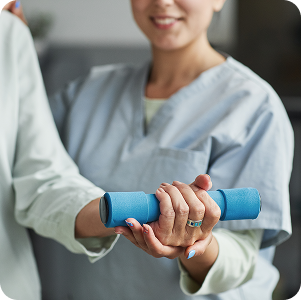
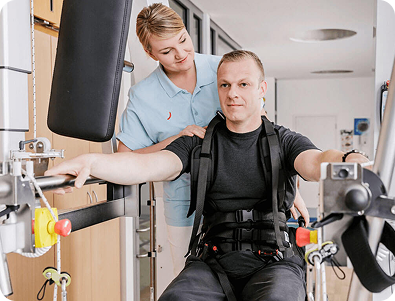
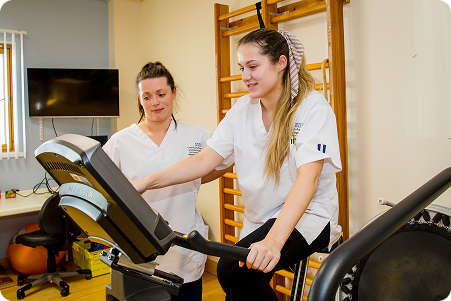
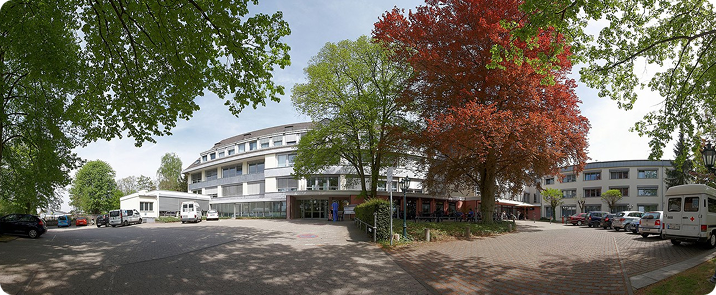
One of the most famous centers is the Schön Klinik network, which specializes in neurological, orthopedic, and psychosomatic rehabilitation. The network's clinics work with patients after severe injuries, strokes, and complex surgeries. It is here that robotic movement recovery systems and modern neurorehabilitation programs are actively used. The BDH-Klinik Hessisch Oldendorf also holds a distinct reputation as one of the strongest neurological rehabilitation centers in Germany. It admits patients with severe nervous system damage, traumatic brain injuries, and after neurosurgical interventions. The clinic is known for handling complex cases that require long-term recovery and constant medical supervision.
In the field of orthopedic rehabilitation and recovery after spinal surgeries, centers in Bavaria and Southern Germany hold strong positions. Here, they actively work with professional athletes and patients after severe musculoskeletal injuries.
A separate area of expertise is oncological rehabilitation in Germany. After cancer treatment, patients require more than just rest; they need a complete recovery of the body. German clinics include programs for physiotherapy, metabolic restoration, chronic fatigue management, nutrition, psychological support, and ongoing medical monitoring.
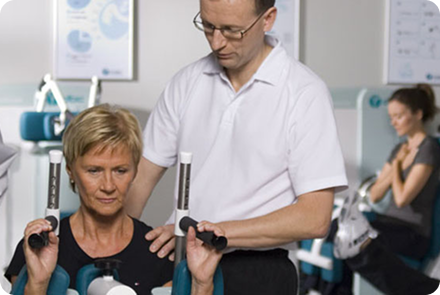
One of the key factors in the success of German rehabilitation is the active implementation of technology. Rehabilitation centers utilize robotic walking recovery systems, neurostimulation, VR technologies, digital analysis of motor functions, modern physiotherapy methods, and neurorehabilitation.
- Robotic walking recovery systems
- Neurostimulation
- VR technologies
- Digital analysis of motor functions
- Modern physiotherapy and neurorehabilitation methods
But the key role is played not by the technology itself, but by how it is integrated into the treatment system. An individual recovery program is created for each patient, with constant dynamic assessment and load adjustment.
WHY IT IS CRUCIAL TO START REHABILITATION ON TIME
In modern medicine, it is the first few weeks after a severe illness or surgery that often determine the future prognosis. This is especially true for neurology. The earlier recovery begins after a stroke or traumatic brain injury, the higher the likelihood of restoring body functions. German clinics place a special emphasis on this. In many cases, rehabilitation begins almost immediately after the patient's condition has stabilized.

GERMAN MEDICAL CONCIERGE
For international patients, the German system can be difficult to organize independently. It is important not just to choose a clinic, but to correctly define the rehabilitation profile, evaluate the recovery prognosis, and select specialists for the specific case. German Medical Concierge helps build this process as a full-fledged medical strategy. The team analyzes the patient's documentation, selects specialized centers and doctors, organizes diagnostics, and supports the patient through all stages of treatment and recovery.
This is particularly important in complex cases where a combination of several areas of rehabilitation is required simultaneously.
Modern rehabilitation in Germany is high-tech medicine based on accurate diagnosis, interdisciplinary work, and a systematic approach. This is why German centers are considered among the best in the world for recovery after strokes, severe injuries, surgeries, and oncological diseases. Today, rehabilitation is no longer just a "recovery period." It is a vital part of treatment, on which the quality of the patient's future life directly depends.