
Obesity in Adolescents: How It's Treated in Germany

Adolescent obesity today is viewed not simply as a weight problem, but as a chronic disease that disrupts all endocrine system functions, hormonal balance, psychological health, and quality of life. This is why the modern approach to treating obesity in children and adolescents in Germany is constantly being revised. In 2026, Germany published an updated version of S3 recommendations for the treatment and prevention of obesity in children and adolescents. A significant change in pharmacological therapy was the emergence of new research on the effectiveness and safety of modern medications in adolescents. A complete update of recommendations is planned for January 2027.
Why Adolescent Obesity Requires Treatment
Obesity in adolescence has a fundamental difference from temporary weight fluctuations during periods of growth. With pronounced obesity, the probability of metabolic and other accompanying disorders increases, and it also significantly affects psychological and physical well-being.
This is why the goal of treatment extends beyond simply reducing the numbers on the scale. German specialists view an adolescent's condition comprehensively, taking into account physical health, development, comorbidities, and expected joint stress. Depending on the clinical situation, more detailed examination by a pediatric endocrinologist, diabetologist, or other specialists may be required. An important principle is that treatment must be individualized. The same BMI in two adolescents does not mean that the same medical strategy will be needed.
How Treatment of Obesity in Adolescents Begins
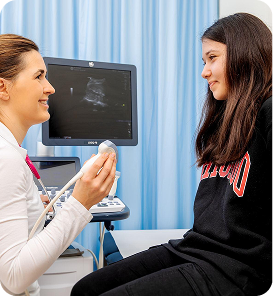
The first stage of treatment in Germany is not assigning a diet or training program, but rather a medical assessment of the adolescent's condition. The doctor must determine the degree of obesity, growth and development characteristics, and the presence of diseases or factors that may affect further treatment. Depending on the clinical situation, more detailed examination by a pediatric endocrinologist, diabetologist, or other specialists may be required. An important principle is that treatment must be individualized. The same weight indicator in two adolescents does not mean that the same medical strategy will be needed.


Modern Scheme of Obesity Therapy in Adolescents
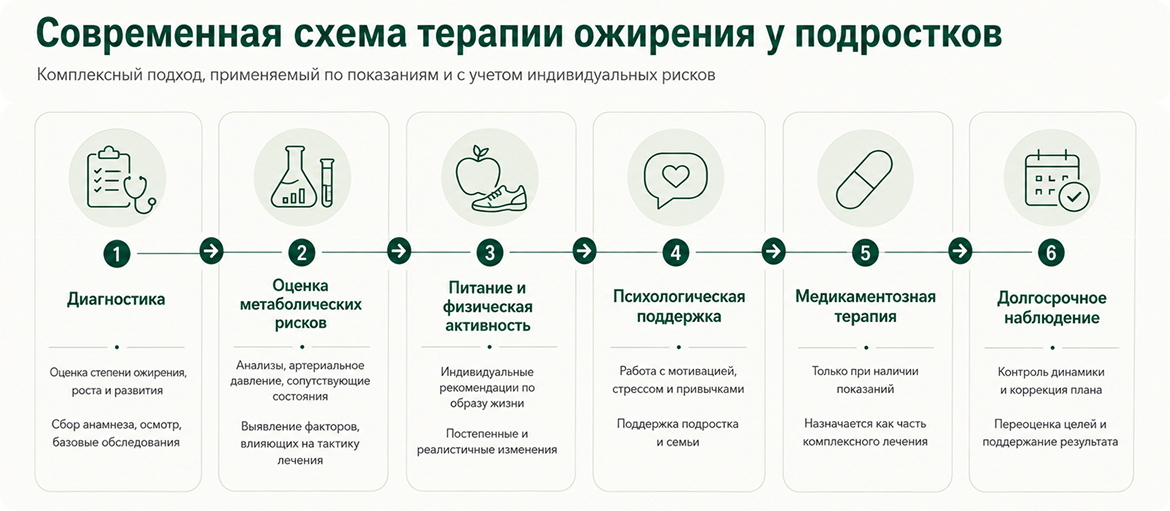
A comprehensive approach applied based on indications and with consideration of individual risks:
Modern Medications for Treating Obesity in Adolescents
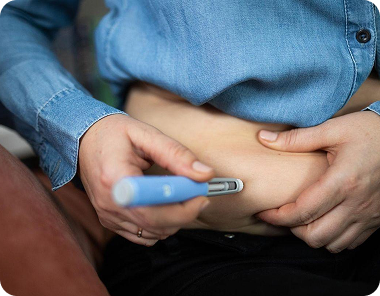
Pharmacological treatment has become one of the most significant changes in modern pediatric and adolescent medicine.
In particular, the updated 2026 German S3 recommendations indicate that therapy with medications from the group of incretin mimetics can be considered in children and adolescents with obesity starting from a certain age, for which the corresponding medication has market approval based on evidence of its effectiveness and safety in pharmacological treatment of children and adolescents with obesity according to effectiveness criteria from the previous 2019 version.
In extreme obesity, defined in recommendations as BMI above the 99.5th percentile, the possibility of such therapy becomes even more relevant. In specialized centers, if despite adequate lifestyle therapy pronounced weight gain persists with high risk of disease progression, treatment requires regular medical supervision and predetermined patient goals and is only appropriate with corresponding indications.


GLP-1 Medications and Adolescent Obesity
The development of medications affecting the incretin system has significantly expanded treatment options for obesity. New evidence-based data on the effectiveness and safety of such therapy prompted the specialist community to revise recommendations. Experts pointed to evidence-based data on the effectiveness and safety of pharmacological treatment of children and adolescents with obesity based on evidence of its effectiveness and safety. Regular independent audits help maintain uniform standards of care and continuously improve treatment outcomes.
However, the decision to prescribe medication to an adolescent is individual. Age, degree of obesity, weight dynamics, previous treatment, comorbidities, contraindications, and potential side effects are all considered. Therefore, self-medication with drugs intended for weight loss or use of medications prescribed for adult family members is not a safe strategy for treating adolescent obesity.

When a Specialized Center Is Needed
The more severe the degree of obesity and the more associated medical problems, the more important the involvement of a specialized team.
In complex cases, treatment may require collaborative work of a pediatric endocrinologist, obesity specialist, dietitian, psychologist or psychotherapist, and other physicians. In German S3 recommendations, specialized centers are separately mentioned when considering comprehensive medical therapy in adolescents with extreme obesity. This allows assessment not only of weight change but also of the adolescent's overall condition, treatment effectiveness, therapy tolerance, and need for adjustments.
Why Psychological Health Is Part of Treatment
Adolescence itself is a complex period in terms of body image, self-esteem, and social adaptation. With obesity, stigmatization, peer-related problems, and psychological difficulties can be added to these natural challenges.
This is why the German approach should not focus solely on constant weight monitoring. Current recommendations for the transition of adolescents into adult healthcare systems specifically mention the need to not only focus on weight change but also on the adolescent's overall well-being, avoiding creating persistent fear of food or weight, and promoting long-term health improvement and self-management ability.


What Happens After Age 18
One of the problems in treating adolescent obesity is that medical supervision is often interrupted after reaching adulthood.
In Germany, this issue is addressed in a separate recommendation called TransFair, published in June 2026. It covers adolescents aged 12 to 17 and young adults aged 18 to 26, and provides for a planned transition from pediatric to adult medicine.
The goal is to ensure that treatment does not stop when a patient reaches age 18. Adolescents are continuously taught to independently monitor nutrition, physical activity, treatment, and medical health. Medical support continues into adulthood, which is an important indicator that prevention can be successful and what specialists in adult medicine will be needed. Current experts confirm the importance of such transitions, as obesity with high probability persists into adulthood.
German Medical Concierge
For parents of foreign patients, it can be difficult to independently determine which specialist an adolescent needs and in which German clinic a comprehensive obesity treatment program exists.
German Medical Concierge helps organize this process as a unified medical strategy. The team analyzes the adolescent's medical documentation, selects specialized obesity treatment centers in Germany, organizes specialist consultations, necessary diagnostics, and obtains second medical opinions, while supporting the family at all stages of treatment.
Modern treatment of adolescent obesity in Germany is no longer organized simply around diet and recommendations to increase physical activity. It is a long-term medical strategy that includes psychological factors and individual risk assessment. The emergence of new pharmacological therapy options makes proper patient selection and treatment under the supervision of specialists experienced in pediatric and adolescent obesity particularly important.