
Immunotherapy in two minutes
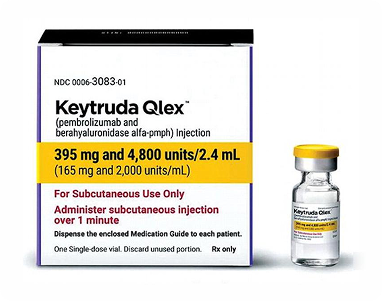
Immunotherapy has become one of the most important areas of modern oncology, and now the format in which it is delivered is also changing in Europe. The European Commission has approved a subcutaneous formulation of pembrolizumab, known by the trade name Keytruda. The drug, which has traditionally been given intravenously over 30 minutes, can now be given subcutaneously to adult patients in approximately one minute every three weeks or two minutes every six weeks. For a cancer patient, this is a significant change. Immunotherapy often requires regular visits to the clinic over many months. Time is particularly important for international patients who travel to Germany for treatment and have to organise travel, accommodation and everyday life around their therapy.
What has changed
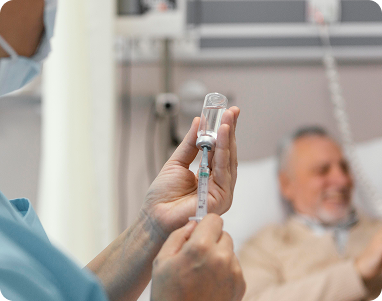
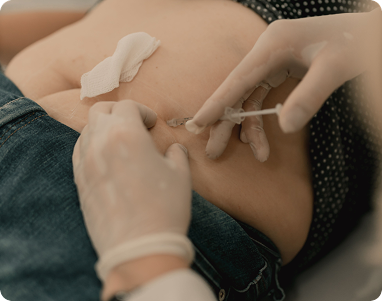
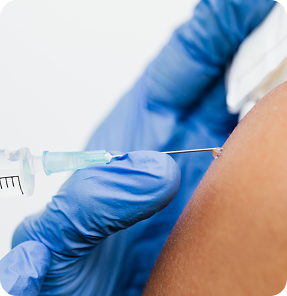
The new formulation uses the same pembrolizumab, a monoclonal antibody that blocks the PD-1 receptor and helps the immune system recognise and attack cancer cells. Berahyaluronicidase alfa, a specialised form of human hyaluronidase, has been added to pembrolizumab. The enzyme temporarily increases the permeability of the subcutaneous tissue, allowing the necessary volume of the drug to be distributed after a single subcutaneous injection. The injection is administered by a healthcare professional in the abdomen or thigh. For adults, two regimens are provided: 395 mg in approximately one minute every three weeks, or 790 mg in approximately two minutes every six weeks. For comparison, intravenous pembrolizumab is given by infusion over 30 minutes.
What the studies showed
Approval of the new formulation is based on the results of the international phase III study 3475A-D77. It involved 377 patients with previously untreated metastatic non-small cell lung cancer without specific genomic alterations in EGFR, ALK and ROS1. Patients received pembrolizumab in combination with chemotherapy, either intravenously or subcutaneously. The study confirmed comparable pharmacokinetic exposure of the drug with both routes of administration. The objective response rate was 45% in the subcutaneous pembrolizumab group and 42% in the intravenous group. At the same time, no significant differences in progression-free survival and overall survival were found between the groups. These figures therefore indicate comparability of results, rather than superiority of the subcutaneous formulation.
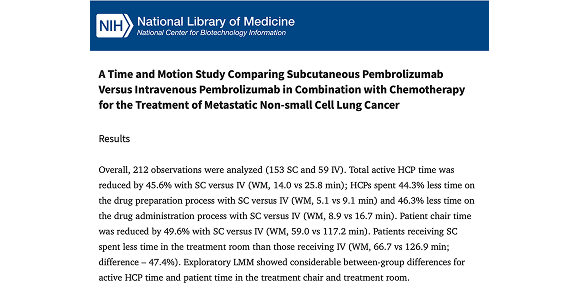
A separate study of the organisation of the treatment process showed one more important result: with subcutaneous administration, the time the patient spent actually in the treatment chair was reduced by 49.7%, and the total time spent in the treatment room by 47.4%. The active time of medical staff associated with preparation, drug administration and monitoring was reduced by 45.7%.
Why two minutes does not mean a two-minute visit
It is important to understand the new technology correctly. One or two minutes refers exclusively to the administration of the drug. Immunotherapy remains a serious oncological treatment. Consultations with an oncologist, laboratory monitoring, assessment of the effectiveness of therapy and monitoring for possible immune-related adverse reactions are still necessary. The subcutaneous formulation does not make the treatment any less serious and does not turn it into an ordinary injection that can be self-administered at home. According to the EMA, the drug must be administered by a healthcare professional.
For which types of cancer is pembrolizumab used
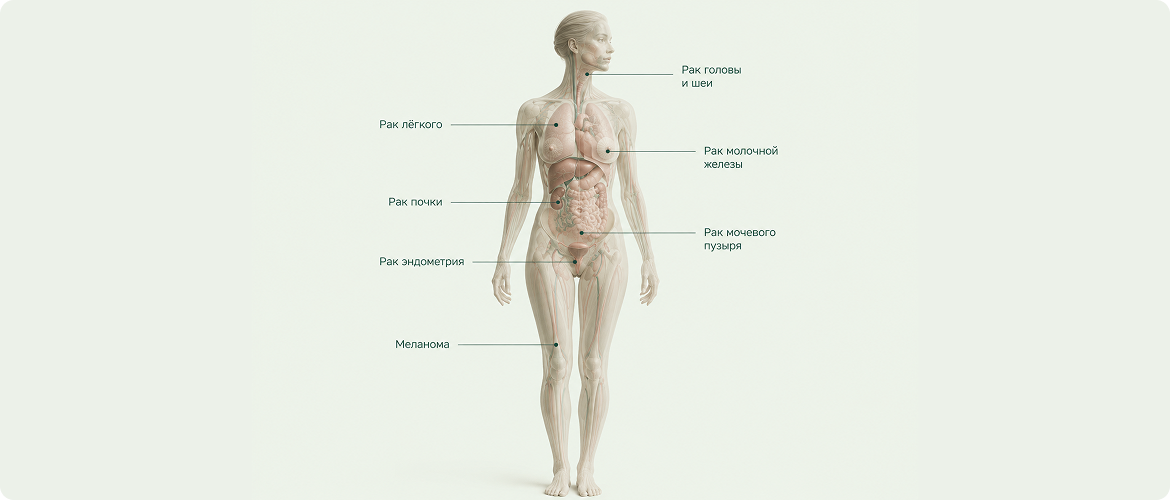
Pembrolizumab is used for a large number of malignancies, both alone and in combination with other forms of anticancer therapy. These include certain forms of lung cancer, melanoma, breast cancer, kidney cancer, bladder cancer, endometrial cancer, head and neck cancer, and cancers of other organs.
In November 2025, the European Commission authorised the subcutaneous formulation for the adult indications of Keytruda approved in the European Union. However, the commercial availability of the drug may vary between individual European countries and depends, in particular, on national reimbursement procedures.
At the same time, the availability of a new route of administration does not automatically expand the indications for pembrolizumab itself. Before prescribing immunotherapy, German oncologists assess the tumour type, disease stage, previous treatment and molecular biological characteristics. For a number of tumours, it is necessary to determine PD-L1 or MSI-H/dMMR status before Keytruda can be prescribed.
Is it possible to switch from intravenous to subcutaneous administration
Yes. According to current EMA information, a patient may switch from the intravenous formulation to the subcutaneous formulation or vice versa at the next scheduled administration of the drug. The decision on the format of therapy is made by the treating oncologist. This is particularly relevant for patients who are facing long-term immunotherapy. If the drug has to be received every three or six weeks over a long period, reducing the procedure itself from 30 minutes to a few minutes gradually becomes a noticeable part of quality of life.
What the new formulation means for international patients
For patients travelling to Germany from another country for treatment, time has additional significance. Long-term anticancer therapy is linked not only to medical procedures, but also to regular travel, living away from home, work and time with family. Subcutaneous administration does not reduce the necessary medical monitoring and does not mean that the patient will require fewer cycles of treatment. But it does make the administration process itself considerably shorter.
German Medical Concierge
German Medical Concierge works with leading oncology and university centres in Germany and other European countries and helps international patients organise diagnostics and treatment in the context of modern oncology capabilities. Where a diagnosis has already been established, the team can arrange a second medical opinion, a review of medical documentation and histological material, a consultation with a specialised oncologist, molecular diagnostics, and also select a suitable medical centre and organise treatment in Germany or other European countries.
For patients already receiving pembrolizumab, German Medical Concierge can arrange a consultation with a German oncologist to assess the ongoing therapy and further treatment strategy.